

A point of view,
carried forward.
What began with Holly's culinary education and a Winston-Salem cooking table grew into a chef-owned company shaped by the same belief: food and hospitality should make people proud to gather.
More than 17 years of custom-crafted events
The story moves through Culinary study, Teaching table, Event operation, Stewardship, Still becoming — a sequence, not a dated calendar.
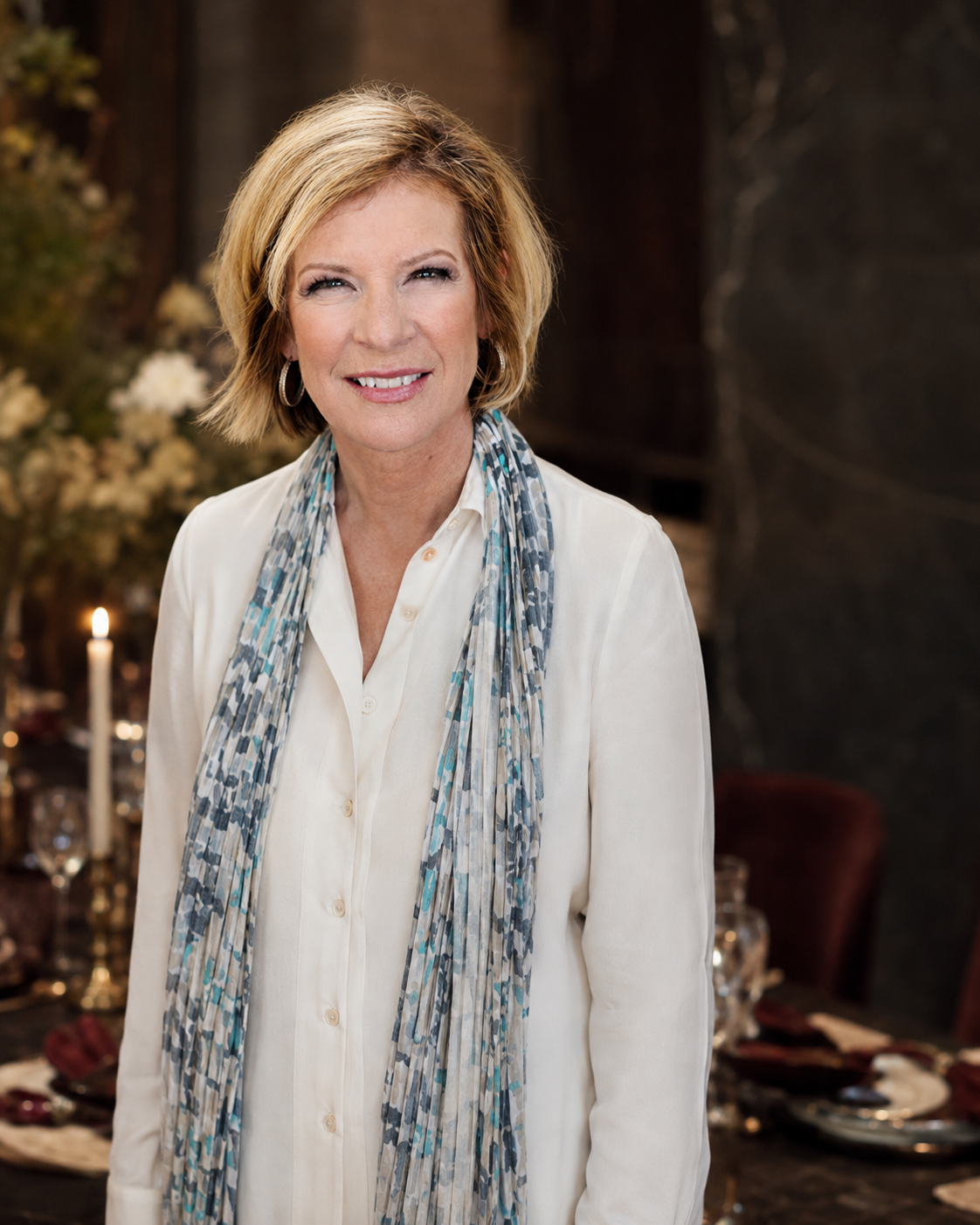
- Before Holly Tate Fine Catering
The company began before it had a name.
Holly's culinary point of view took shape through formal training in Paris and continued study in California. The influence was never about making food feel remote or precious. It was about technique in service of something warm, generous and deeply enjoyable.
When the family settled in Winston-Salem, that idea found its first local expression around a teaching table.
An undated lineage: each place shaped the next. No years are recorded here.
- ParisFormal culinary training
- CaliforniaContinued study
- Winston-SalemA local expression
- The teaching tableTechnique shared generously
Technique mattered. So did the pleasure of sharing the result.
- Everyday Gourmet
First, Holly taught people how to make the dinner.
The Everyday Gourmet Cooking School brought people together to learn a complete meal and then sit down to enjoy it. The food was considered but approachable—the kind of cooking that made an ordinary evening feel like an occasion.
Over time, students began asking a different question: would Holly prepare the food for the parties they wanted to host? Teaching became private dinners. Private dinners became larger celebrations. A catering company emerged from demand at the table.
Each step led to the next: Learn a complete meal, then Sit down and enjoy it, then Asked to prepare private dinners, then Larger celebrations followed.
- Learn a complete meal
- Sit down and enjoy it
- Asked to prepare private dinners
- Larger celebrations followed
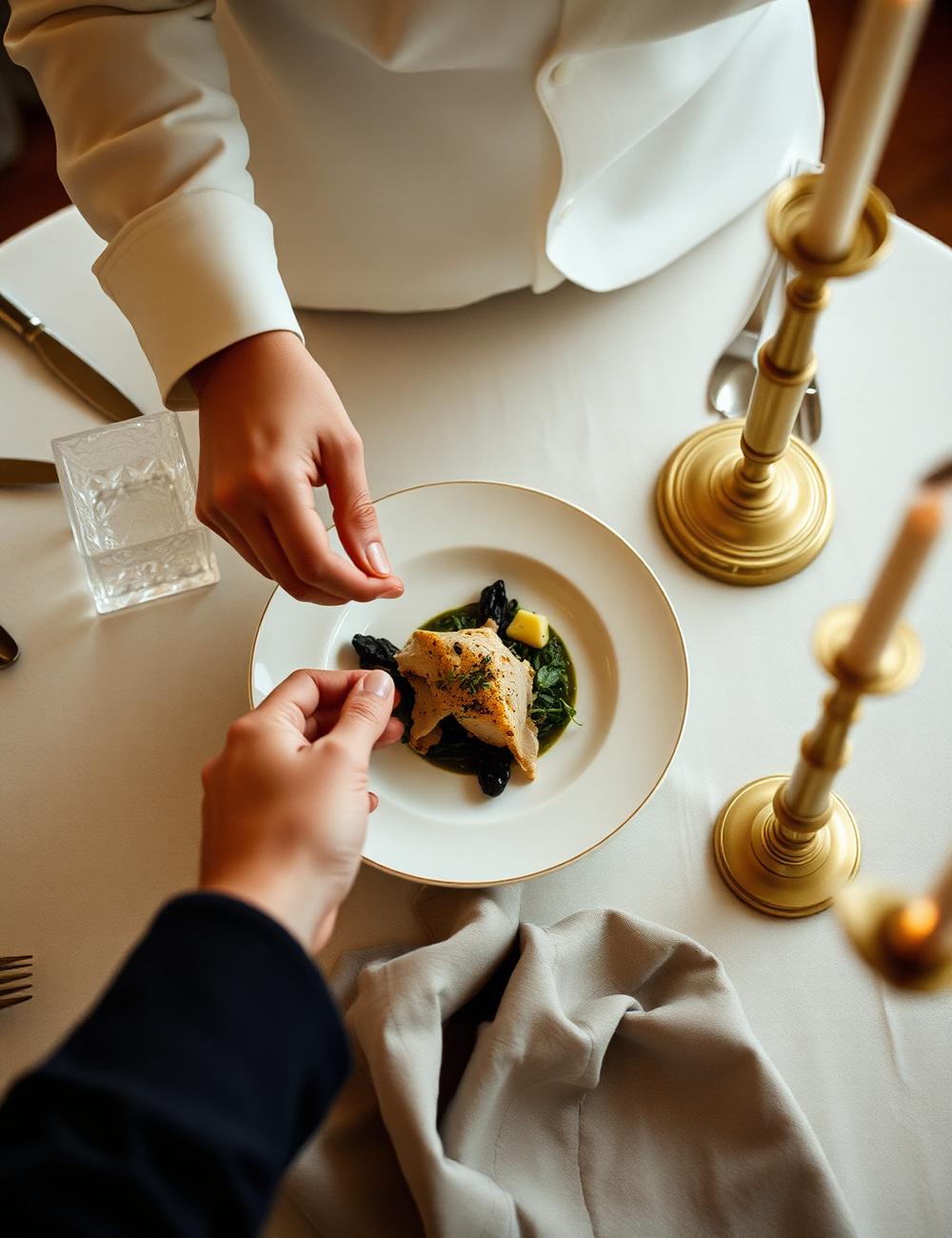
Interpretive art direction. Archival material to be confirmed. 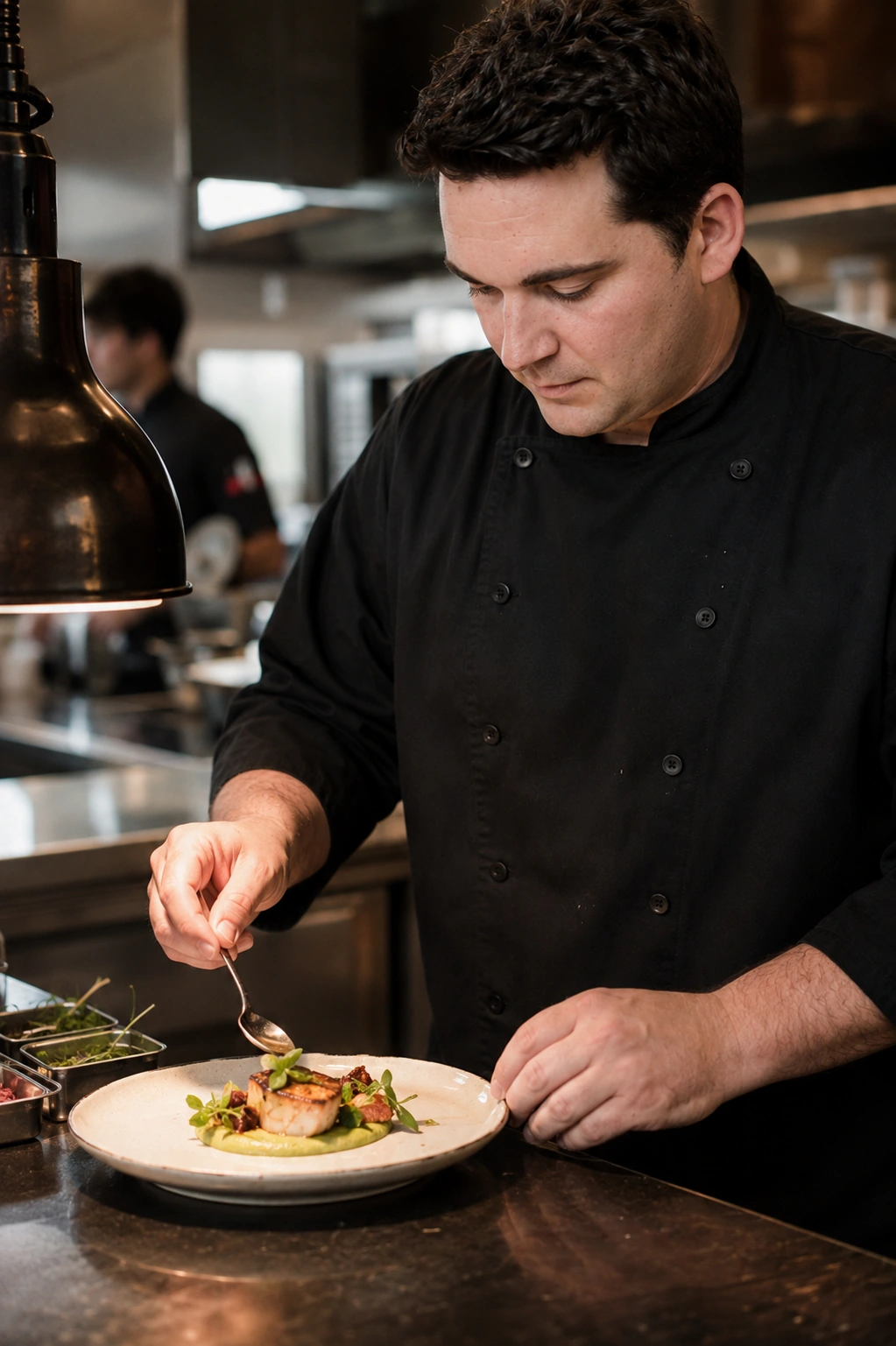 The Work Grew
A beautiful recipe is only the beginning.
As guest counts and event demands grew, the work needed more than a larger batch. It needed a commercial kitchen, disciplined preparation, reliable staffing and a way to protect the food through travel, timing and service.
Chef Ben became central to that evolution. He brought broad restaurant experience and the rigor to help turn an unusually deep menu library into consistent event production—without flattening the food into a standard package.
A beautiful recipe is one thing; Commercial kitchen, Disciplined preparation, Reliable staffing, Travel, Timing, Service are what an event operation must hold together. Together they resolve as: Consistent event production without a standard package
Where it startsA beautiful recipe
What it has to survive- Commercial kitchen
- Disciplined preparation
- Reliable staffing
- Travel
- Timing
- Service
Consistent event production without a standard package
Each of these — Sourcing, Preparation, Distance, Holding, Finishing, Plating, Service — becomes a harder problem as an event grows, which is why the note ends at Culinary judgment and operating discipline.
- Sourcing
- Preparation
- Distance
- Holding
- Finishing
- Plating
- Service
Culinary judgment and operating discipline
- Closer to Service
The venue should not decide how good the food can be.
Many event spaces were never designed as restaurant kitchens. Rather than accept that limitation as the final word, the Holly Tate model evolved around bringing more culinary capability to the setting.
Preparation begins in the commercial kitchen. Cooking, finishing and plating can then happen on location whenever the venue and event conditions allow— helping protect temperature, texture, timing and presentation closer to the moment guests are served.
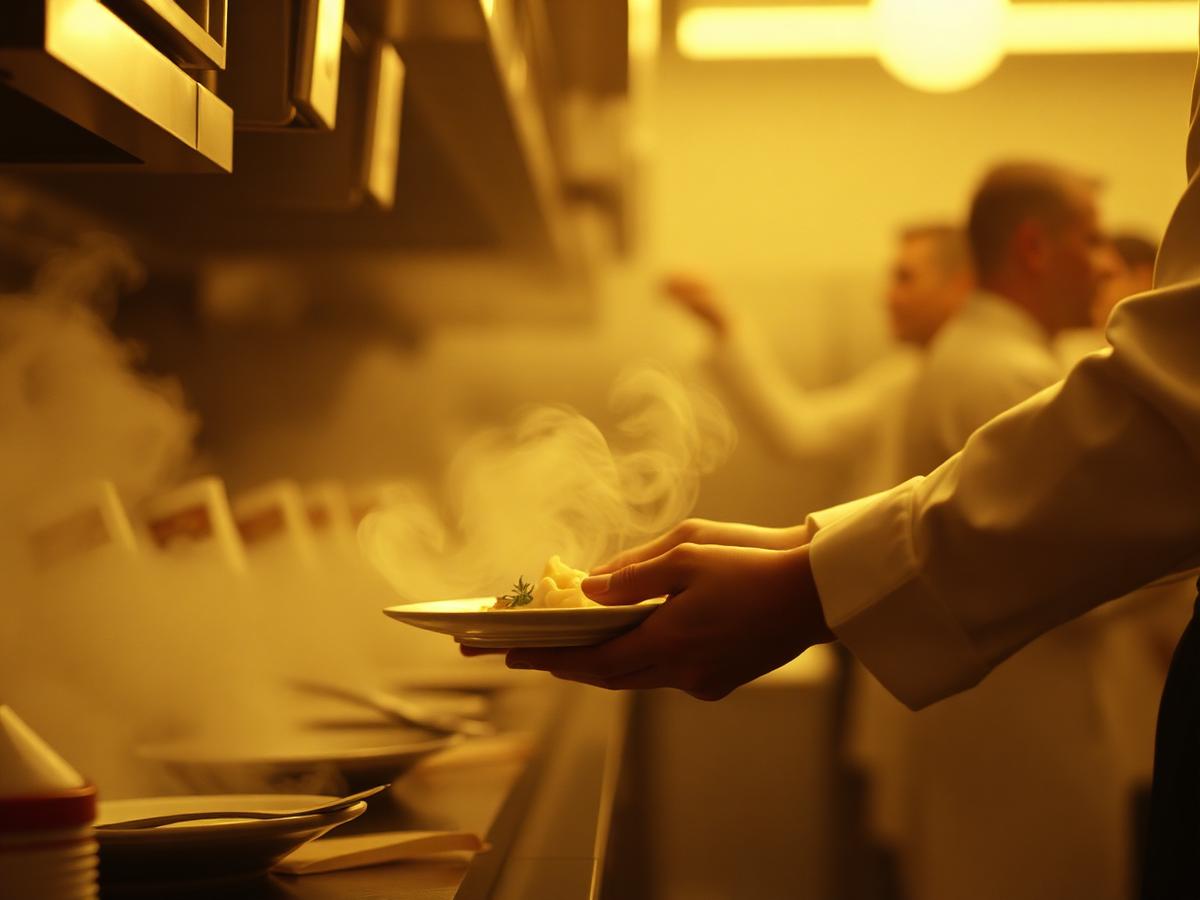
Two of these moments are conditional: they depend on the venue and event conditions.
- Preparation begins in the commercial kitchen
- Venue and event conditions are evaluatedConditional
- Cooking, finishing and plating can move closerConditional
- The moment guests are served
- The Next Steward
The name stayed. Responsibility moved forward.
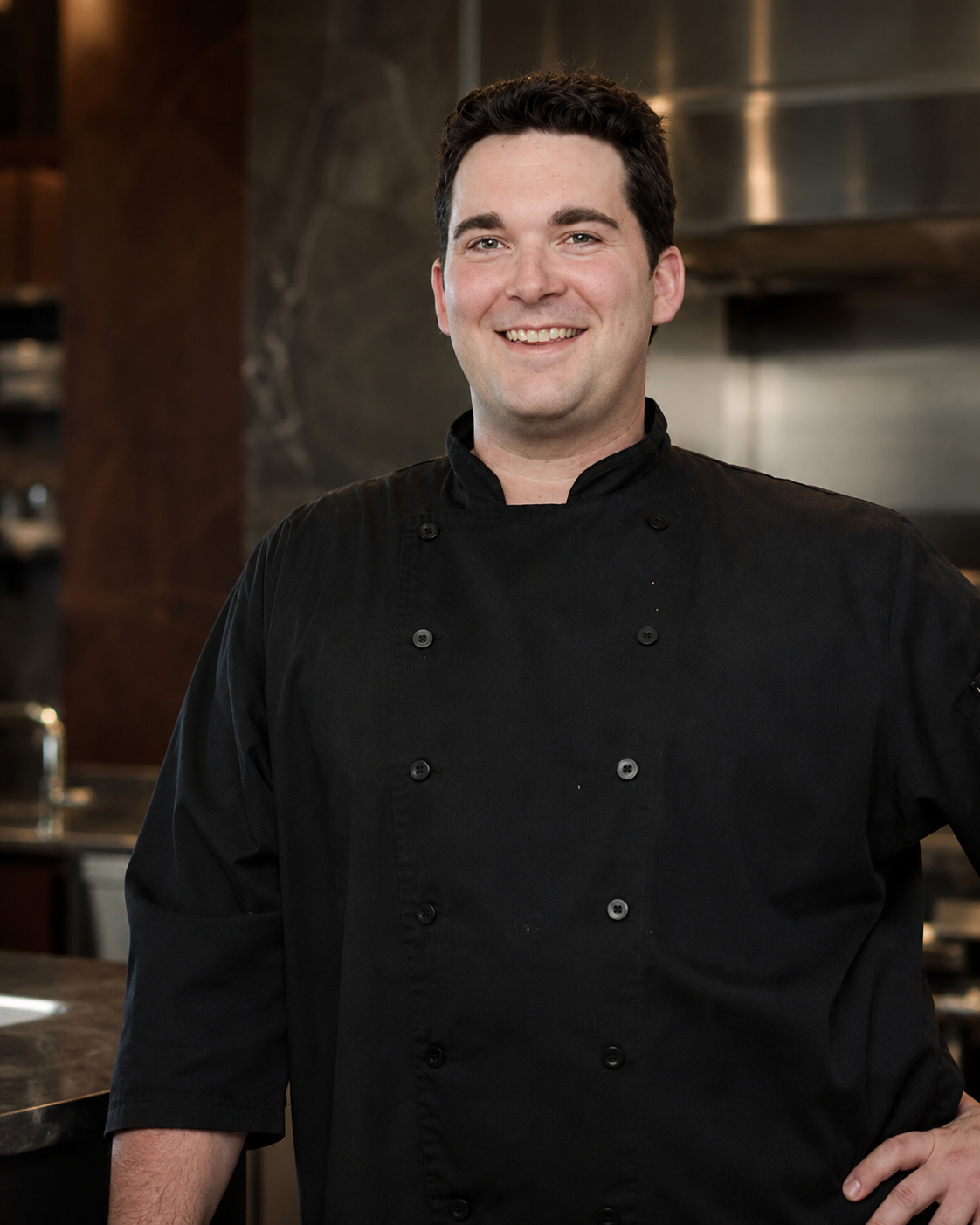
When Holly and John began stepping back from day-to-day ownership, the next chapter did not begin with a stranger. Chef Ben—the person who had already spent years shaping the culinary operation—became Owner and Chef.
Heather carries the work into detailed planning and event execution. John and Holly remain connected to the beginning of the relationship, learning what clients are trying to create and helping shape the direction before the operating handoff.
The roles are different now. The throughline is clear: respect the host, understand the room, make the food worthy of the occasion and care for the people gathered around it.
Four distinct responsibilities, carried forward rather than ranked.
- HollyFounder and culinary origin
- John & HollyEarly conversation and advisory guidance
- Chef BenOwner and Chef
- HeatherOperations and continuity of care
- A Living Standard
Legacy is useful only when it still shapes the work.
The company has grown, the roles have changed and the operating model has become more capable. The original values remain practical decisions, not language framed on a wall.
- What evolvedThe menus keep evolving.
- What remains in practiceThey still begin with the client rather than a tier or package.
- What evolvedThe operation became more sophisticated.
- What remains in practiceFood is still protected as something guests should genuinely remember.
- What evolvedResponsibility moved to a new generation of leadership.
- What remains in practiceThe relationship still carries from the first conversation into execution.
- What evolvedThe company can serve more complex events.
- What remains in practiceHospitality still comes down to noticing individual people.
 Still Becoming
The next chapter is already being written.
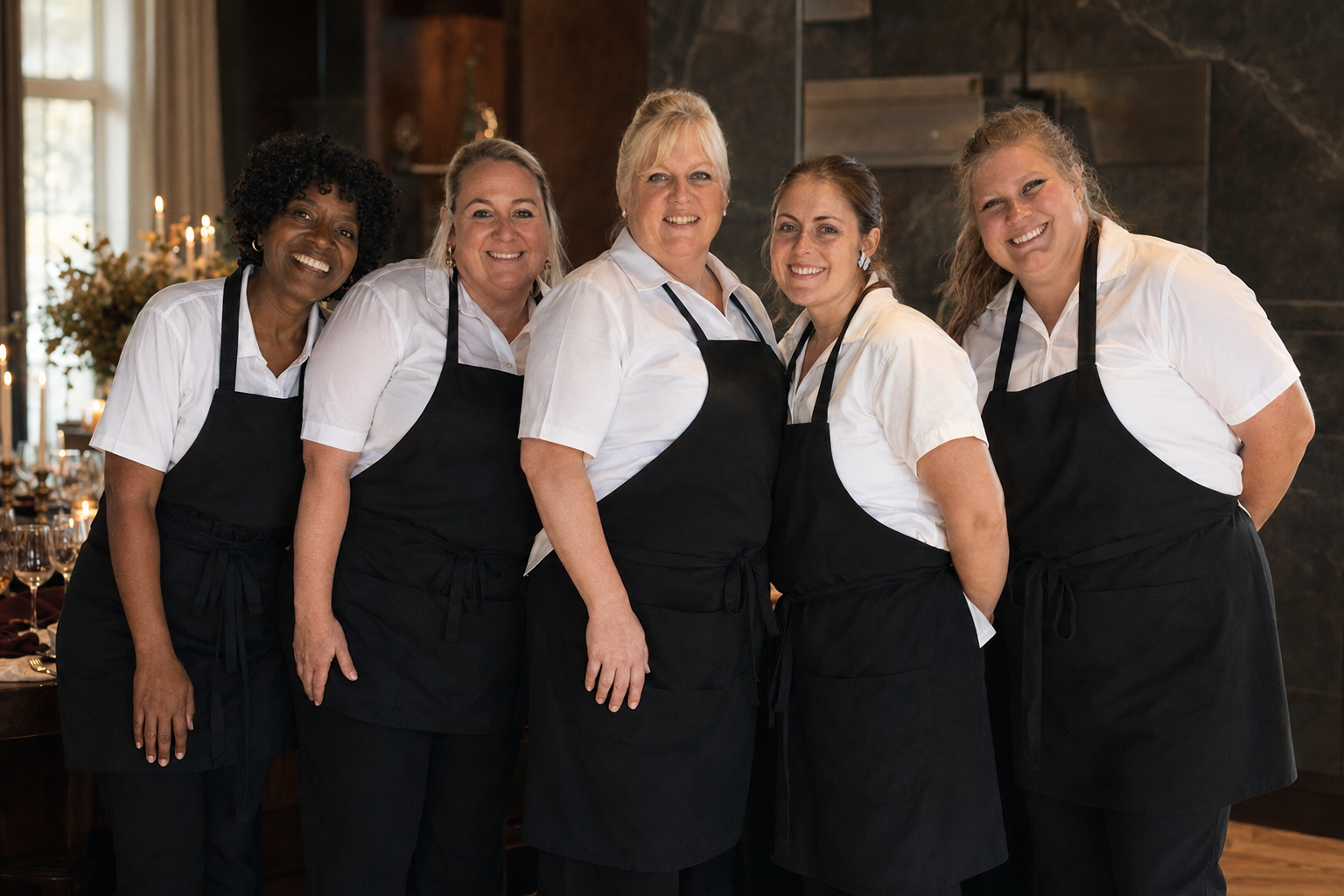
Chef Ben and Heather now lead the daily work with a team built around culinary care and gracious service. John and Holly continue to bring their accumulated regional and event judgment into the conversations that shape each new engagement.
The legacy is not a finished story. It is visible whenever the team asks better questions, adapts the menu to the event and leaves a host proud of how their guests were cared for.
Distinct present roles, with the next engagement still open.
- Chef Ben + Heather
- Daily work
- John + Holly
- Accumulated judgment in early conversations
- The team
- Culinary care + gracious service
The next engagement
Tell us what you want your guests to remember.
Bring John and Holly the date, setting and experience you have in mind. The next custom menu begins with that conversation.
- Your occasion
- What guests should remember